

 Gem StoreBrowse every stone


Learn · Collector’s guide
How to choose a demantoid.
A practical guide to choosing demantoid — what to look for, what to ask, and how to compare stones with confidence.
What matters
What matters most.
- 01
Colour
The single biggest influence on beauty. Compare hue, tone and saturation in more than one light.
Learn more - 02
Fire & brilliance
Demantoid’s signature. Move the stone under a small direct light and watch for spectral flashes.
Learn more - 03
Clarity
Transparency and the character of inclusions — some, like horsetails, are celebrated.
Learn more - 04
Inside the stone
A clarity guide.
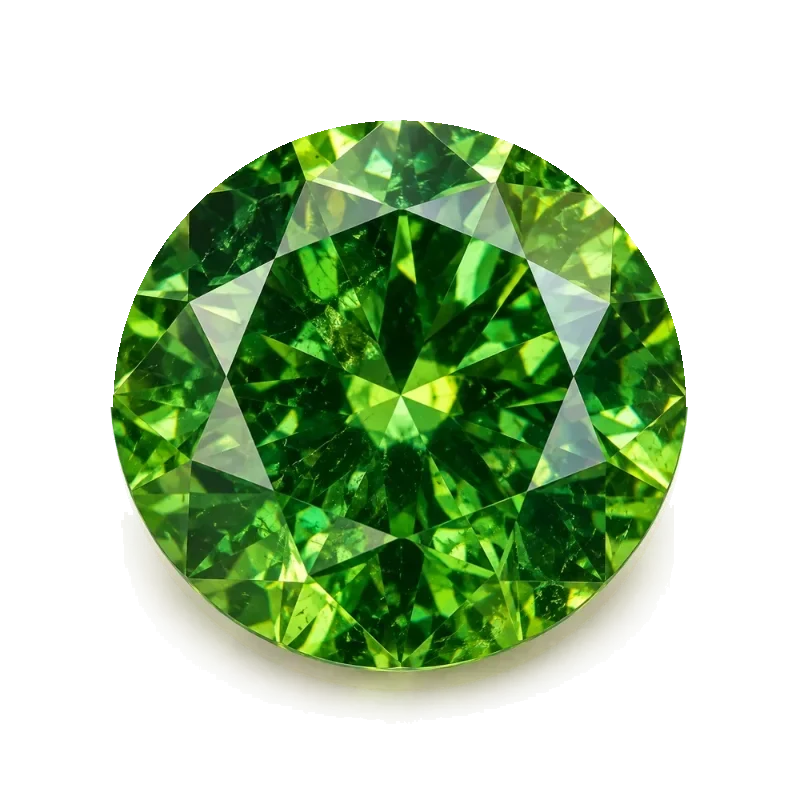
Loupe Clean
No inclusions visible with a loupe, or extremely difficult to see. Exceptional clarity, with exceptional fire and lustre.
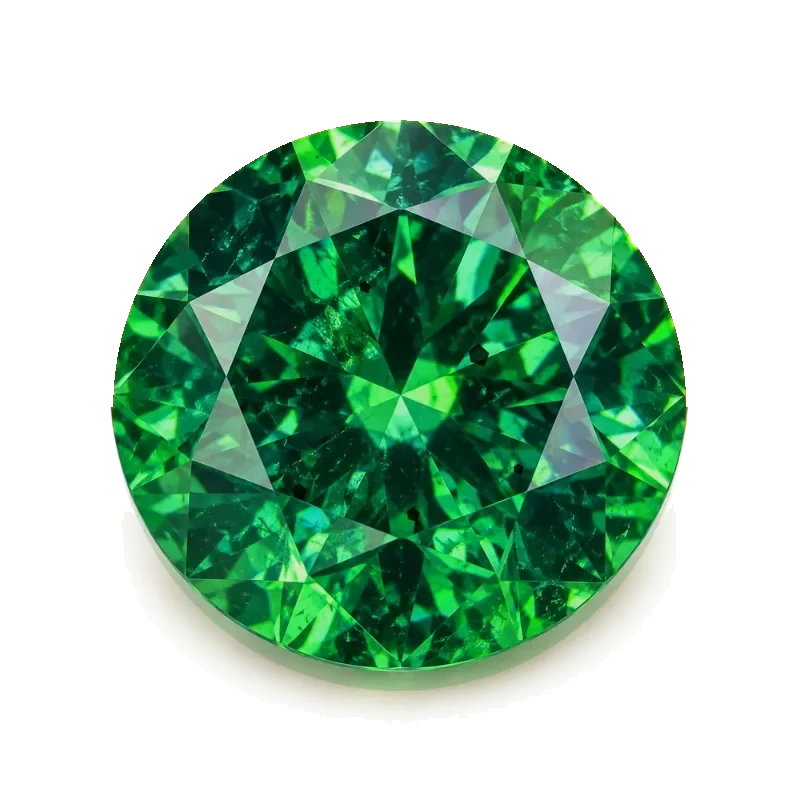
Eye Clean
Only very minor inclusions — fine cracks or tiny feathers under the table visible with a loupe, or minor surface-reaching cracks near the girdle. Excellent fire and lustre.
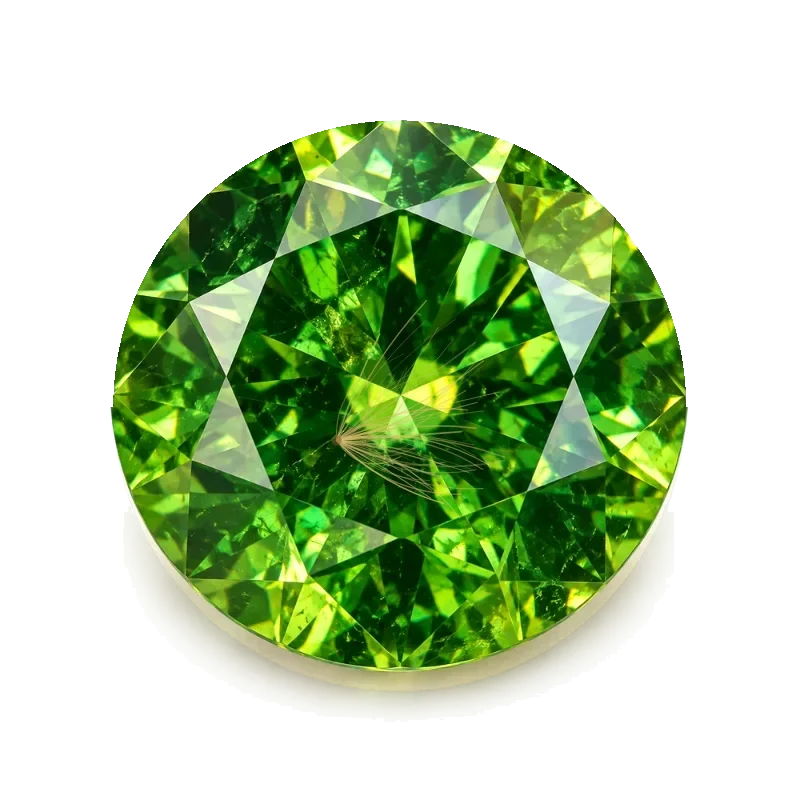
Minor Inclusions
Fine cracks of medium density under the table, or larger cracks around the stone. Still beautiful clarity, with very good fire and lustre.
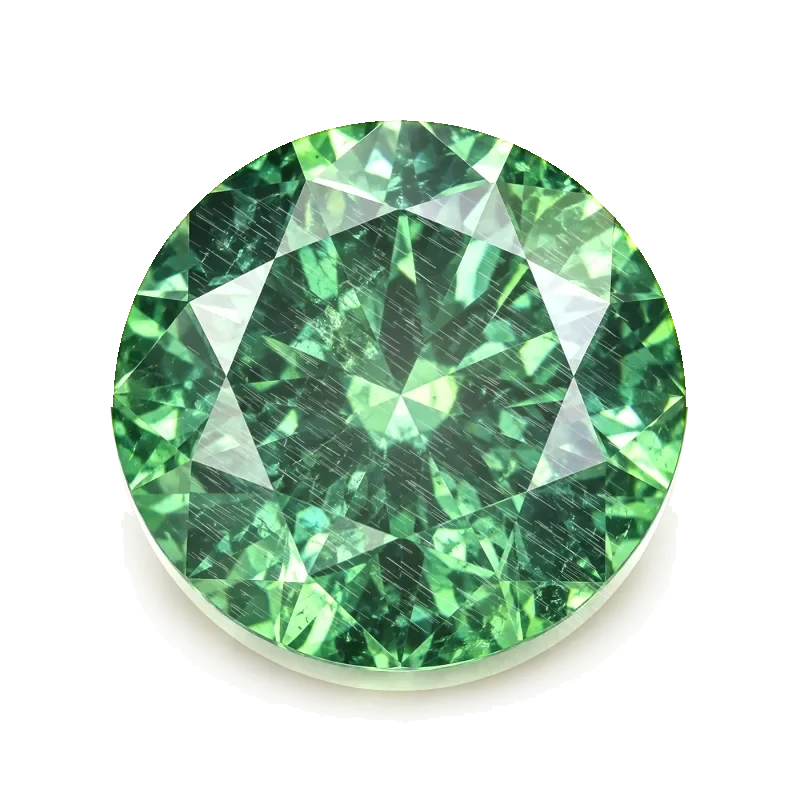
Moderate Inclusions
Denser fine cracks under the table, or one prominent crack. Good fire and lustre, slightly reduced.
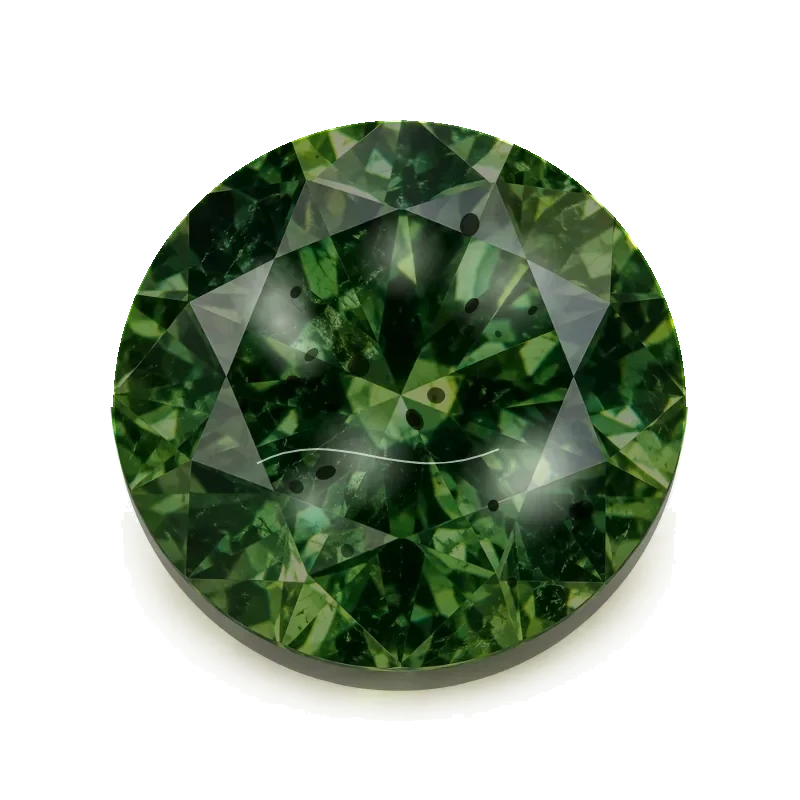
Heavy Inclusions
Dense fine cracks under the table with at least one large crack. Fair fire and lustre, reduced.
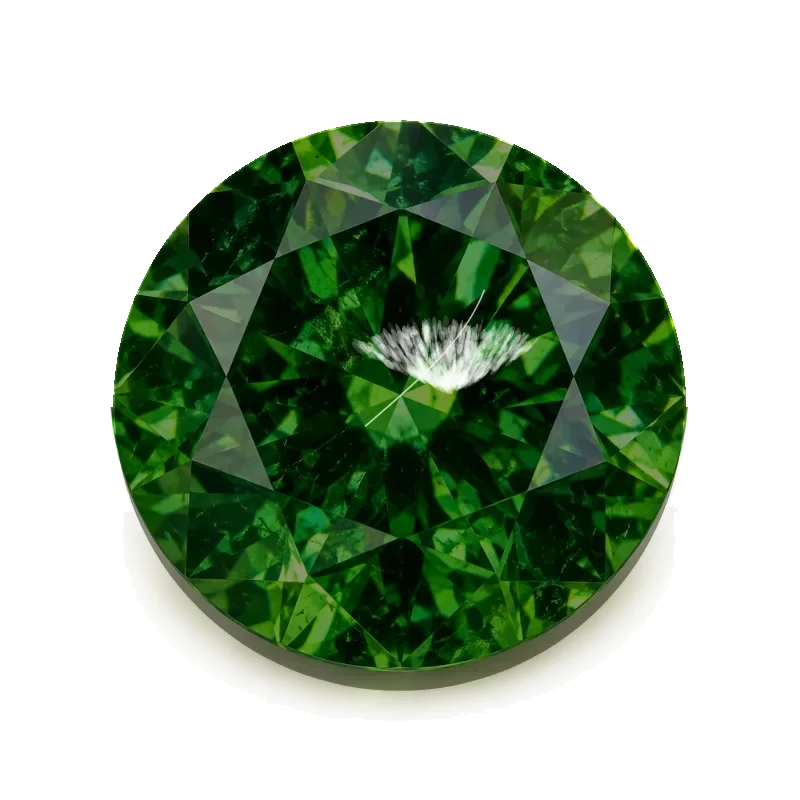
Very Heavy Inclusions
Very dense fine cracks with several large, obvious cracks under the table and around the stone. Fire and lustre significantly reduced.
Extremely Included
Extremely high inclusion density, or very large cracks that remove most of the fire and lustre.
Images are illustrations used to explain each clarity type.
Weight and size
How big is a carat?
| Weight | Approx. diameter |
|---|---|
| 0.5 ct | ≈ 4.9 mm |
| 1 ct | ≈ 6.2 mm |
| 1.5 ct | ≈ 7.1 mm |
| 2 ct | ≈ 7.8 mm |
| 3 ct | ≈ 8.9 mm |
Demantoid is denser than diamond, so a 1 ct demantoid is slightly smaller face-up than a 1 ct diamond. Actual size depends on proportions.
Before you decide
Your buying checklist.
Questions
Common questions.
What matters most when choosing a demantoid?
Colour first, then how it handles light (fire and brilliance), then clarity and size. A smaller stone with exceptional colour is often more rewarding than a larger, duller one.
Should I avoid inclusions?
Not necessarily. Horsetail inclusions are prized by many collectors. What matters is whether an inclusion affects beauty or durability.
What documentation should I ask for?
Actual photographs and video, weight, measured dimensions, treatment disclosure and any independent laboratory report for the exact stone.
Ready to compare stones?
Filter the store by weight, colour and clarity.