

 Gem StoreBrowse every stone


Discover · Origin
Where demantoid comes from.
Where demantoid is found, how it forms, and how experts work out where a stone comes from.
Begin with the earth
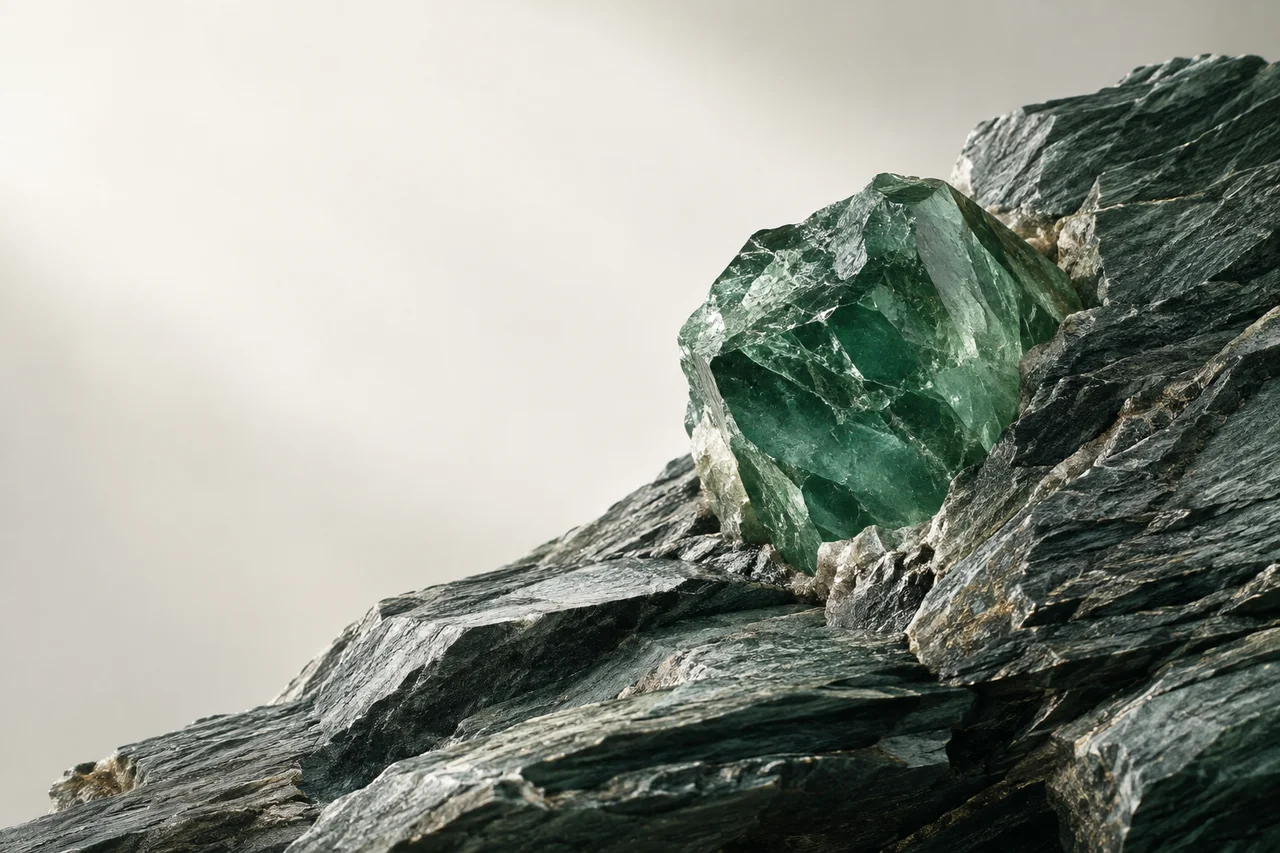
How demantoid forms.
Demantoid is the green variety of andradite garnet. Gemmological research describes two main settings in which gem-quality material grows.
Serpentinite-hosted
Formed in altered ultramafic rocks. Research describes occurrences of this type in Russia, Iran and Pakistan. Fibrous “horsetail” inclusions are characteristic of this setting.
Skarn-hosted
Formed where hot fluids react with carbonate rocks. Material from this setting typically lacks horsetail inclusions.
Around the world
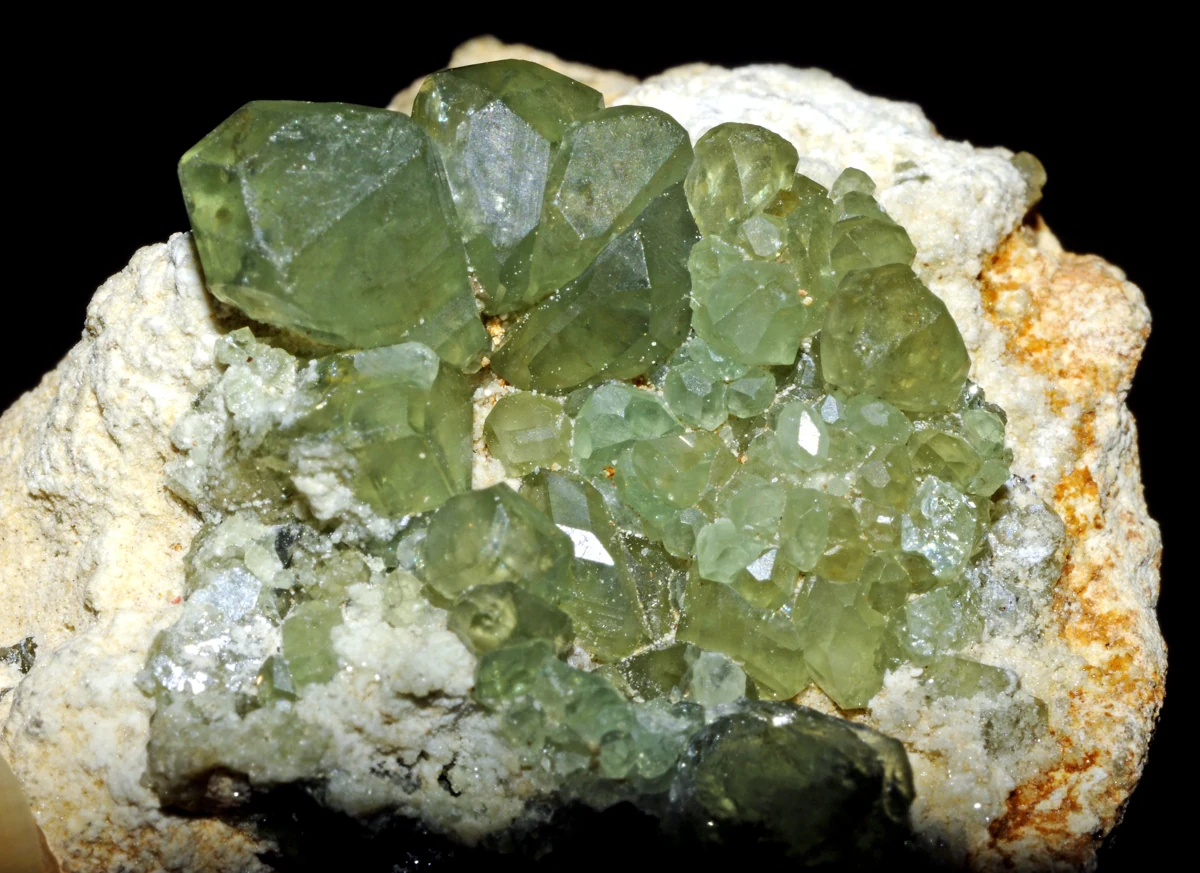
Where demantoid is found.
| Locality | Geological setting | Horsetail inclusions |
|---|---|---|
| Iran | Serpentinite-hosted | Can occur |
| Russia (Ural Mountains) | Serpentinite-hosted | Characteristic |
| Italy | Serpentinite-hosted | Can occur |
| Pakistan | Serpentinite-hosted | Can occur |
| Namibia, Madagascar | Skarn-hosted | Typically absent |
Summary for orientation only. Individual stones vary; see the original research below.
Evidence, not assumption
How origin is determined.
Records
Who supplied the stone, and what chain-of-custody documents exist?
Observation
A gemmologist studies inclusions under magnification — useful clues, never proof alone.
Analysis
Laboratories compare trace-element chemistry with reference data.
Opinion
The result is an origin opinion on an independent report, stated for that stone only.
Further reading
- Gems Formed in Metamorphic Rocks Aaron C. Palke & James E. Shigley · Gems & Gemology · Summer 2023
- Does a horsetail inclusion guarantee Russian origin? GIA · Garnet questions & answers
- The Gübelin Gem Project: Garnet GIA · Research collection · Garnet data sheets
Questions
Common questions.
Can the origin of a demantoid be seen with the eye?
Not reliably. Inclusions such as horsetails offer clues, but similar features occur in demantoid from several countries. Origin opinions come from laboratories combining inclusion study with chemical analysis.
Does a horsetail inclusion prove Russian origin?
No. GIA notes that horsetail inclusions also occur in demantoid from Iran and Italy. A single feature is never proof of origin.
Are the stones on this site documented as Iranian?
Current store records are samples. Origin is stated for a specific stone only when supported by records and, where available, an independent laboratory opinion.
Ask about a stone’s records.
For any stone, we share what is documented — and what is not.